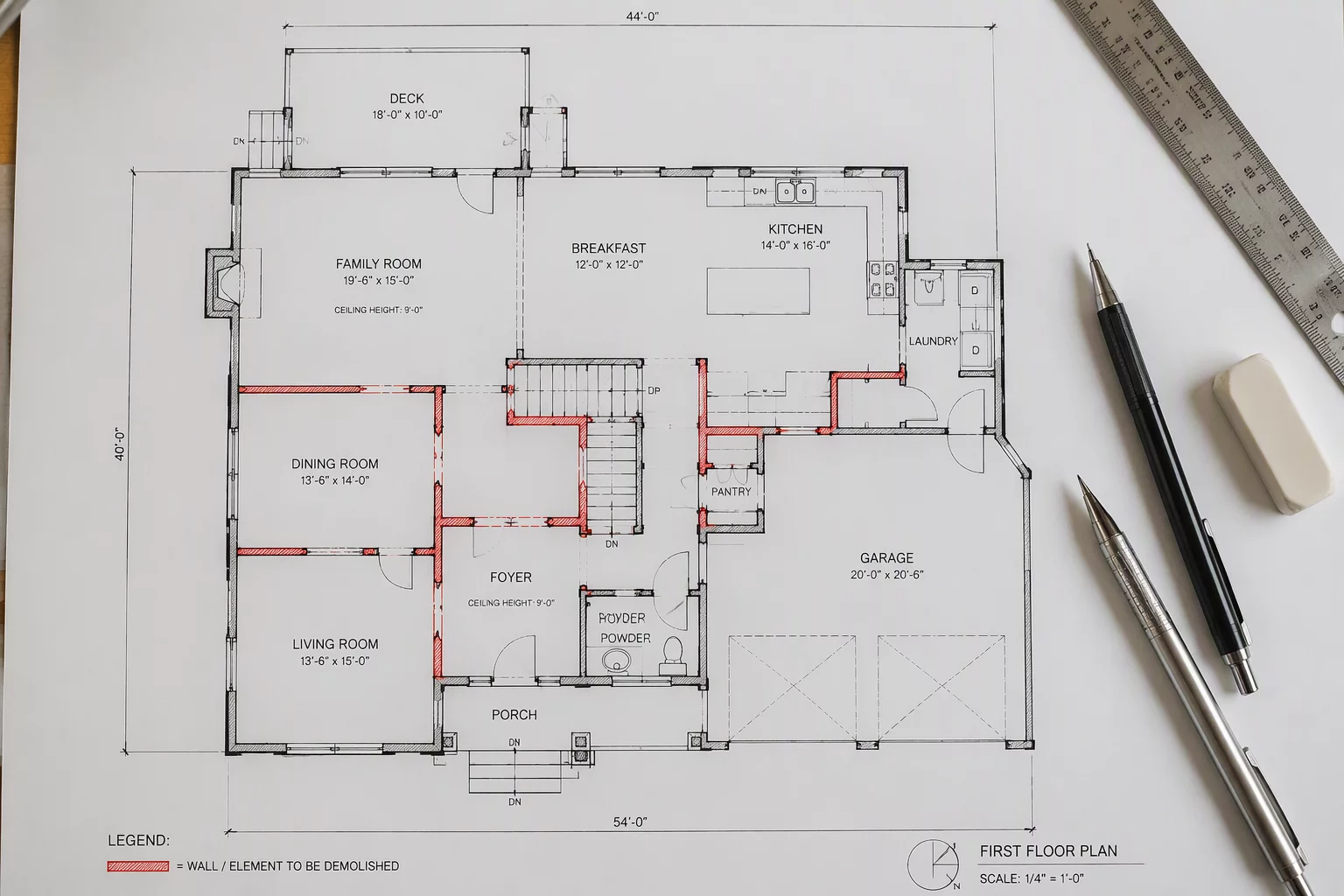
Core Boundary: Destruction Versus Strategic Extraction
Renovation and adaptive reuse models frequently blur the line between demolished components and items temporarily removed for reconditioning or relocation. Misclassifying these statuses distorts carbon accounting, inventory tracking, and structural sequencing. This protocol establishes parameter rigor to cleanly isolate permanent site debris from reusable building assets.
01 Taxonomy and Semantic Distinction
In BIM and construction management ledgers, 'Demolition' implies the irreversible breakdown and disposal of an architectural component. Its lifecycle terminates in the active phase, leaving no downstream material trail other than waste tonnage. In contrast, 'Removal' identifies components dismounted, cataloged, or held in suspense for refurbishment, historical preservation, or reinstallation in subsequent development cycles.
Applying the wrong parameter triggers severe coordination friction. Demolition schedules generate debris clearing contracts, whereas removal registers dictate specialized handling, tagging, secure warehouse staging, and chain-of-custody logging. The ledger enforces strict semantic segregation at the element creation level.
The Conservation Rule of Phased Entities
An element marked as Demolished cannot receive future target phase coordinates. An element marked as Removed must reference a staging ledger ID, preservation status, and an assigned destination phase or off-site warehouse repository.
Pre-Phase Classification Criteria
- Evaluate structural versus non-structural integrity before issuing teardown codes.
- Verify preservation mandates and historical landmark covenants for all salvaged joinery and masonry.
- Assign unique QR inventory identifiers to all extracted fixtures destined for future phases.
- Ensure graphic overrides display demolished elements in red dashed strokes and removed elements in amber dotted outlines.
04 Frequently Asked Questions
Audit Your Phasing Taxonomy & Data Pipelines
Connect with our methodology specialists to review your BIM standards, eliminate demolition ambiguities, and streamline renovation worksheets.
05 Related Documentation
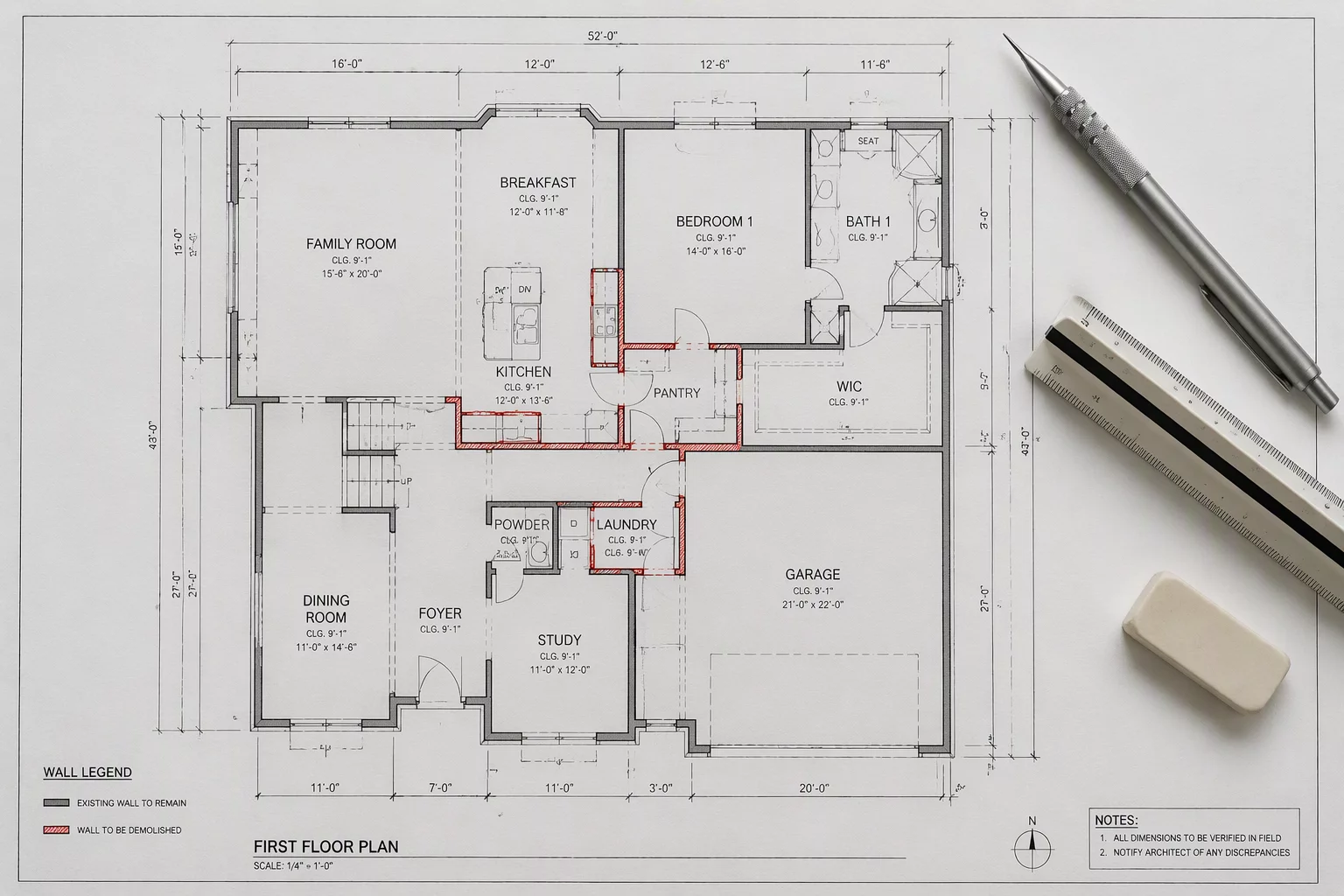
Defining Existing Conditions in BIM
Establish bulletproof baselines for heritage and renovation modeling, preventing spatial drift and scope ambiguity before initial phase planning.

Managing Temporary Project Structures
Standardize temporary scaffolding, shoring, and protective enclosures within phased models without corrupting permanent lifecycle datasets.